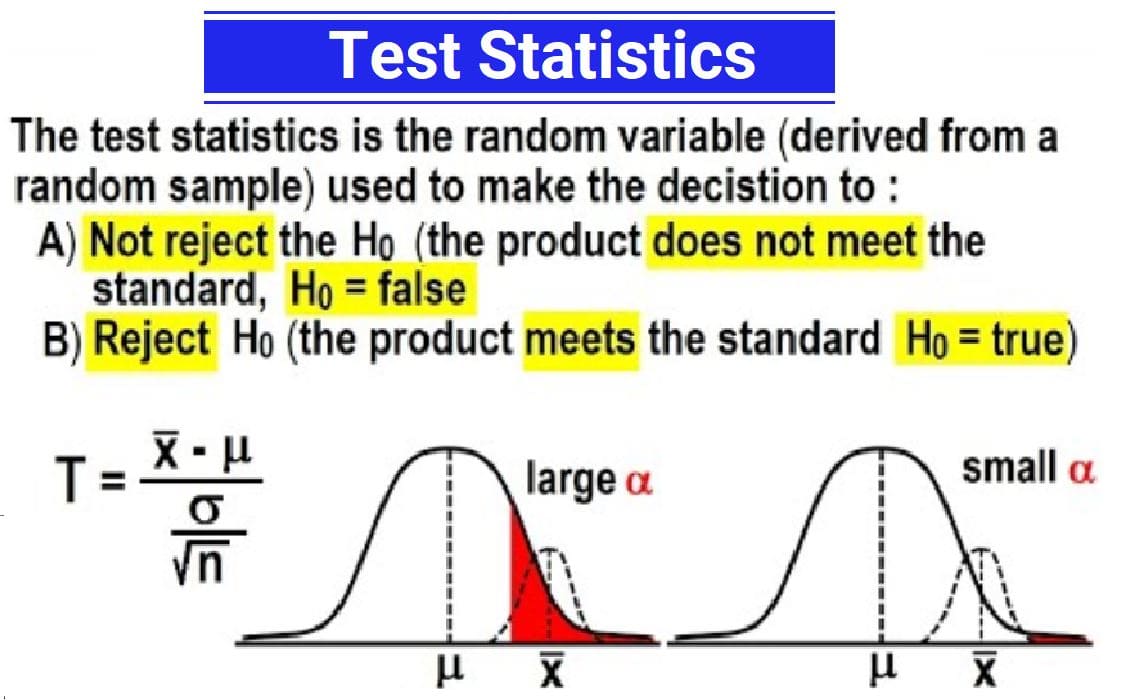
📘 Test Statistic & Standardized Testing Logic
It converts sample evidence into a measurable scale so we can evaluate whether the result is unusual.
🎯 Why Test Statistics are Needed
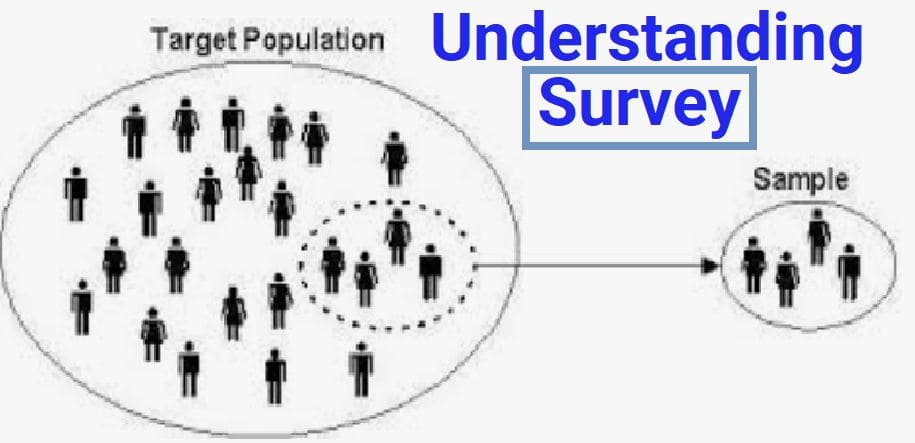
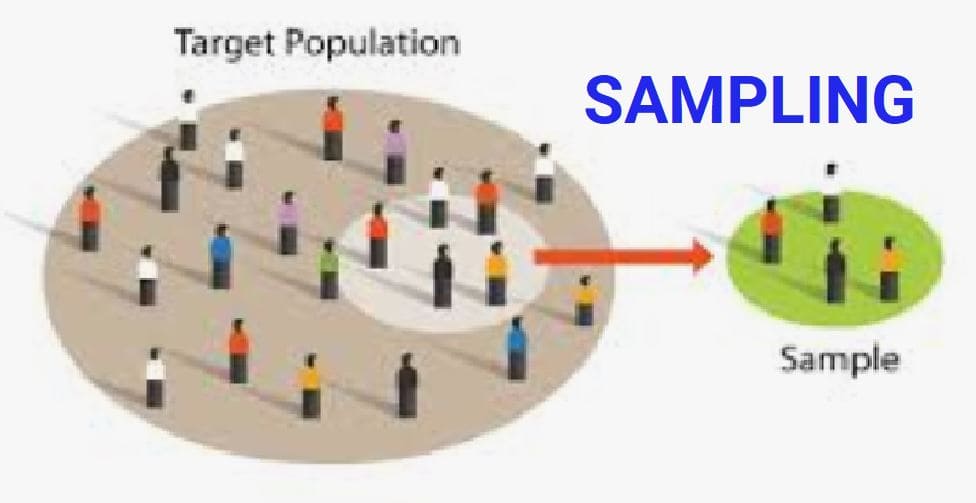
When we collect sample data, the result rarely matches the population value exactly due to sampling variability.
We must determine whether the difference is:
- Small → due to random variation
- Large → evidence against the null hypothesis
📏 General Structure of a Test Statistic
\[ \text{Test Statistic} = \frac{\text{Observed Value} - \text{Expected Value}}{\text{Standard Error}} \]
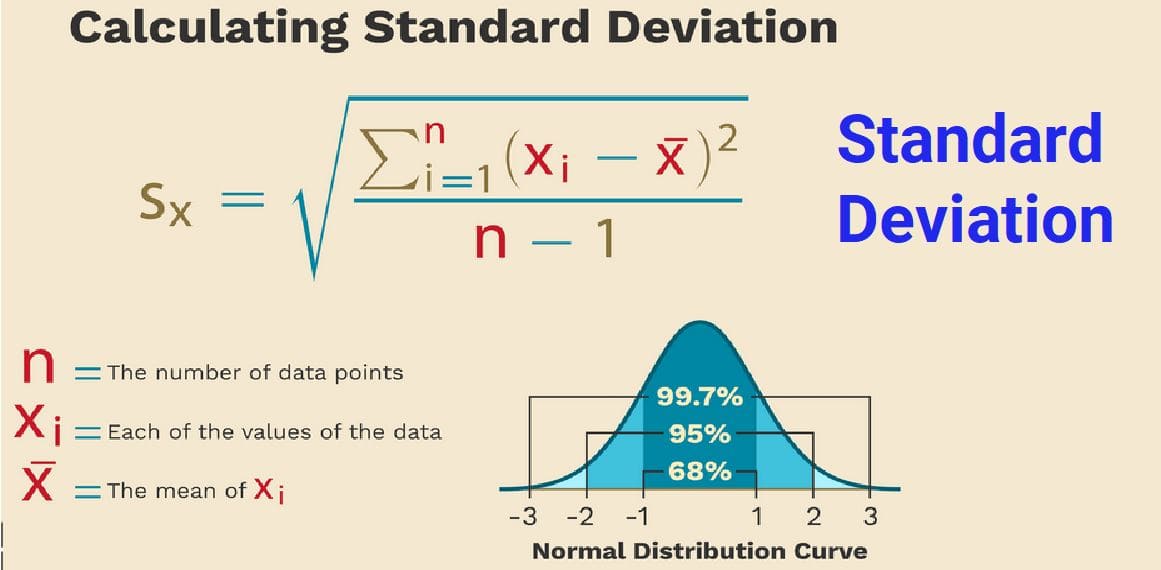
This measures how many standard errors the sample result is away from the null hypothesis value.
🧠 Conceptual Meaning
- Small test statistic → Sample close to expectation
- Large test statistic → Sample far from expectation
Larger deviations make the null hypothesis less believable.
📐 Standardization Principle
Standardization converts different measurement scales into a common scale.
This allows comparison using probability distributions.
🔢 Common Test Statistics
1️⃣ Z-Test Statistic (Known σ or Large Sample)
\[ Z = \frac{\bar{x} - \mu_0}{\sigma / \sqrt{n}} \]
- Used when population standard deviation is known
- Used for large samples
2️⃣ t-Test Statistic (Unknown σ)
\[ t = \frac{\bar{x} - \mu_0}{s / \sqrt{n}} \]
- Uses sample standard deviation
- Used for small samples
3️⃣ Proportion Z-Test
\[ Z = \frac{\hat{p} - p_0}{\sqrt{p_0(1-p_0)/n}} \]
- Used for binary outcomes
- Common in surveys and classification accuracy
🔍 Example 1 — Mean Test
Claim: Average battery life is 10 hours
Sample Data:
- Sample mean = 11 hours
- Population σ = 2 hours
- Sample size = 100
Step 1: Standard Error
\[ SE = \frac{2}{\sqrt{100}} = \frac{2}{10} = 0.2 \]
Step 2: Test Statistic
\[ Z = \frac{11 - 10}{0.2} = \frac{1}{0.2} = 5 \]
🔍 Example 2 — Proportion Test
Claim: Defect rate is 5%
Sample Data:
- Sample proportion = 8%
- Sample size = 400
Test Statistic
\[ Z = \frac{0.08 - 0.05}{\sqrt{0.05(0.95)/400}} = \frac{0.03}{\sqrt{0.00011875}} = \frac{0.03}{0.0109} \approx 2.75 \]
📊 Interpreting Test Statistics
| Test Statistic Value | Interpretation |
|---|---|
| Near 0 | Data consistent with H₀ |
| Moderate | Some evidence against H₀ |
| Large | Strong evidence against H₀ |
🎯 Critical Regions
If the test statistic falls in extreme regions of the probability distribution, we reject H₀.
🔗 Link with p-value
The test statistic determines the p-value.
- Larger test statistic → Smaller p-value
- Smaller p-value → Stronger evidence
🤖 Importance in Machine Learning
- Comparing algorithm performance
- Evaluating model improvements
- Feature selection testing
- A/B testing systems
🧠 Key Insights
- Test statistic standardizes sample evidence
- Measures deviation from null hypothesis
- Expressed in standard error units
- Forms basis for probability-based decisions
- Used to compute p-values