📘 Bayesian Statistics: Introduction & Applications
Unlike classical statistics, which treats parameters as fixed but unknown, Bayesian statistics treats parameters as random variables that can be updated using observed data.
🎯 Core Idea of Bayesian Thinking
Bayesian statistics is based on the idea that our beliefs about a parameter should be updated whenever new evidence becomes available.
It combines:
- Prior knowledge (what we believe before observing data)
- Observed data (new evidence)
- Posterior belief (updated belief after observing data)
📐 Bayes' Theorem
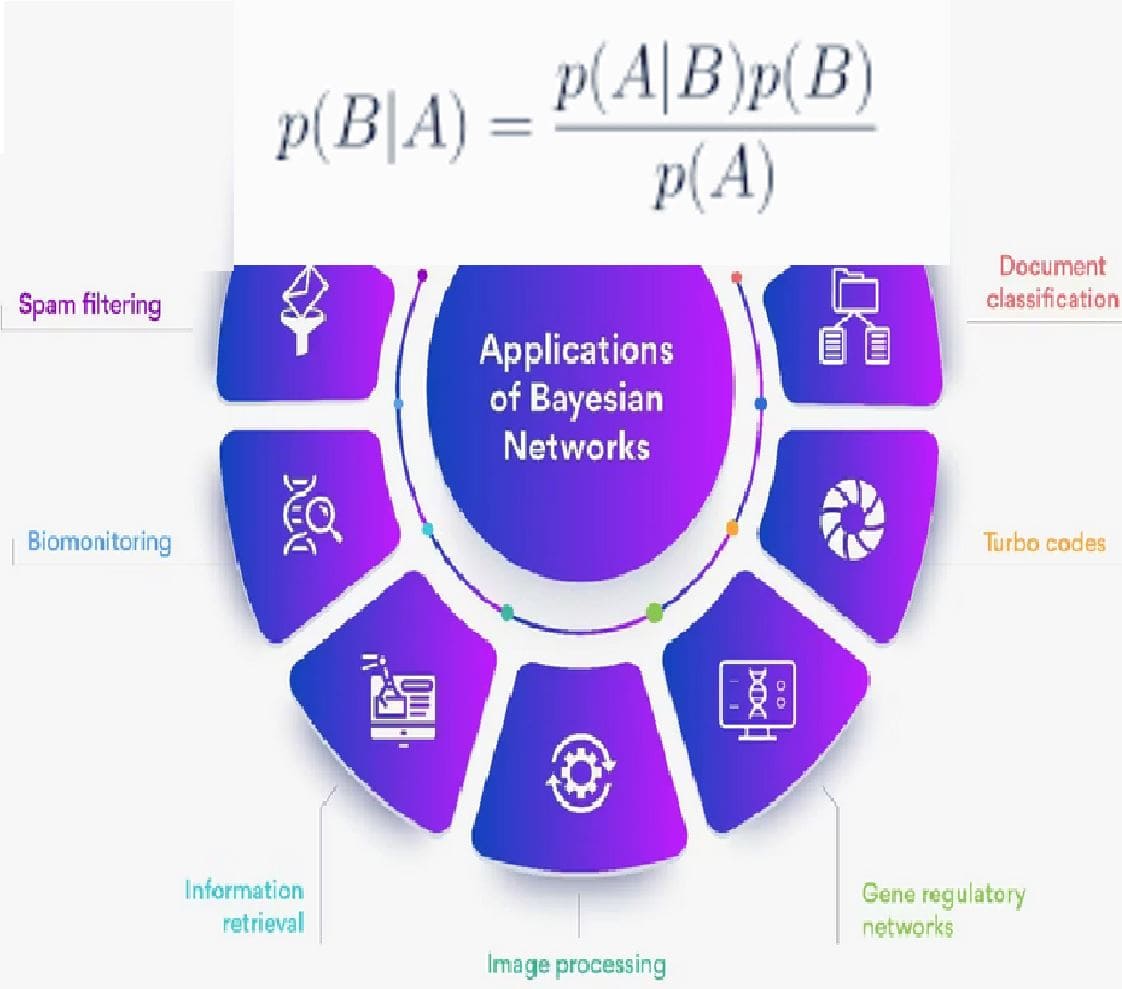
Bayesian statistics is built upon Bayes' Theorem, which describes how probabilities are updated.
\[ P(A|B) = \frac{P(B|A) \times P(A)}{P(B)} \]
Where:
- P(A|B) → Posterior Probability
- P(B|A) → Likelihood
- P(A) → Prior Probability
- P(B) → Evidence
🧠 Key Components of Bayesian Inference
1️⃣ Prior Probability
Prior represents the belief about a parameter before observing new data.
Example:
- Suppose historically 1% of people have a certain disease.
- This becomes our prior probability.
2️⃣ Likelihood
Likelihood represents how likely the observed data is given a particular hypothesis.
Example:
- If a test correctly detects disease 95% of the time, this influences the likelihood.
3️⃣ Posterior Probability
Posterior is the updated probability after considering the evidence.
🔍 Example — Medical Diagnosis
Suppose:
- 1% of people have a disease → Prior = 0.01
- Test detects disease correctly 99% of the time
- False positive rate = 5%
A patient tests positive. What is the probability they actually have the disease?
Using Bayes' theorem:
\[ P(Disease | Positive) = \frac{P(Positive | Disease) \times P(Disease)} {P(Positive)} \]
After calculation, the probability might be around 16–20%, not 99%.
📊 Bayesian vs Classical Statistics
| Aspect | Classical Statistics | Bayesian Statistics |
|---|---|---|
| Parameters | Fixed but unknown | Random variables |
| Use of prior knowledge | Not used | Explicitly included |
| Inference method | Hypothesis testing | Probability updating |
| Interpretation | Frequentist probability | Subjective probability |
📈 Bayesian Updating Process
Bayesian learning follows a cycle:
- Start with a prior belief
- Collect data
- Update beliefs using Bayes' theorem
- Posterior becomes new prior
- Repeat as more data arrives
🤖 Applications in Machine Learning
Bayesian methods are fundamental in many ML algorithms.
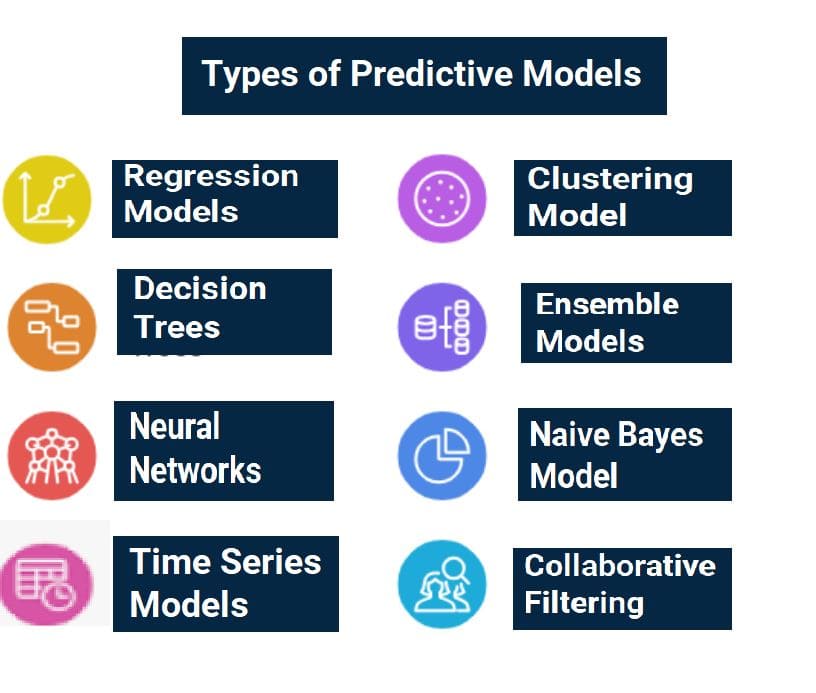
- Naive Bayes Classifier
- Spam filtering
- Recommendation systems
- Medical diagnosis AI
- Bayesian neural networks
- Probabilistic graphical models
🔎 Example — Spam Email Detection
Suppose:
- 40% of emails are spam
- The word "free" appears in 70% of spam emails
- The word "free" appears in 10% of normal emails
If an email contains the word "free", Bayesian inference helps compute the probability that the email is spam.
This is exactly how the Naive Bayes spam filter works.
🧠 Key Insights
- Bayesian statistics updates probabilities using new data
- Prior beliefs combine with observed evidence
- Posterior probabilities represent updated knowledge
- Bayesian reasoning is widely used in AI and machine learning
- It provides a flexible framework for handling uncertainty