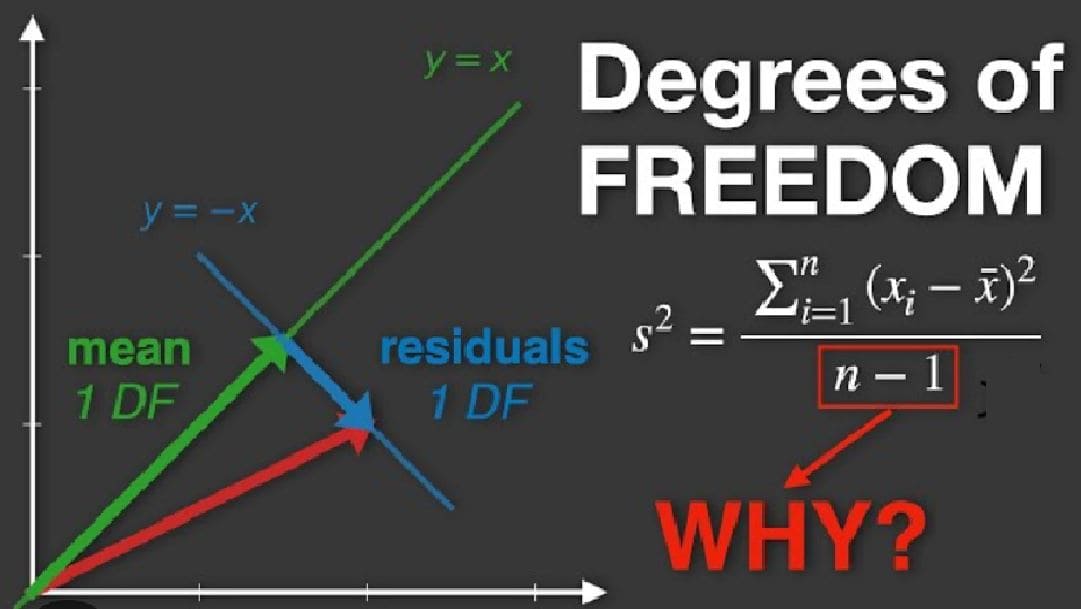
📊 Degrees of Freedom in Statistics
Degrees of Freedom (DF).
It is a fundamental idea used in variance, standard deviation, hypothesis testing, regression, and machine learning algorithms.
🎯 Why Do We Need Degrees of Freedom?
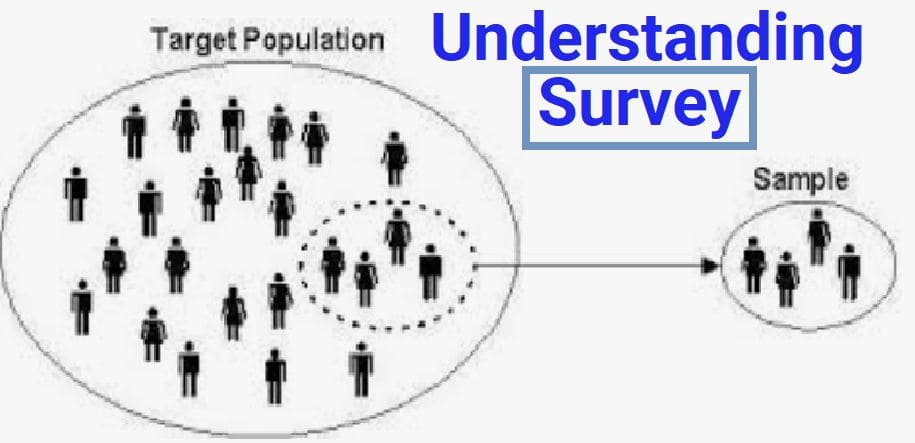
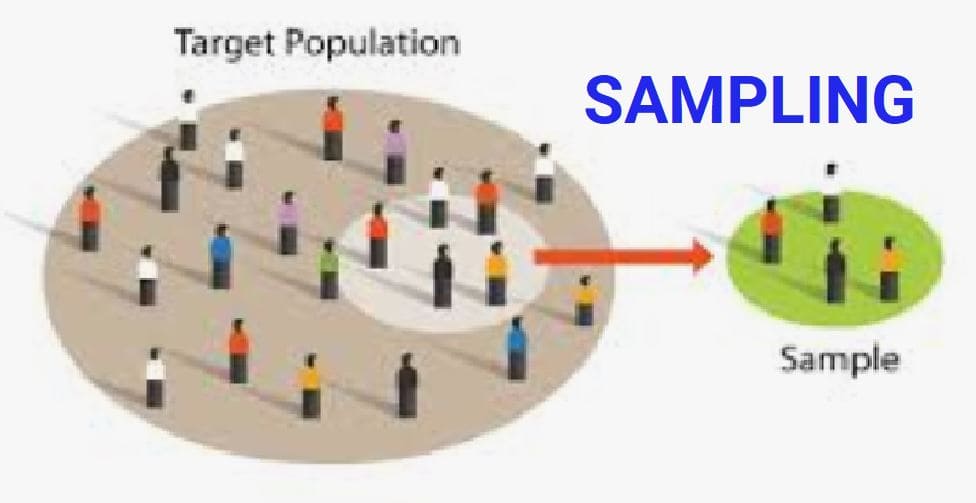
In statistics, we often estimate unknown population values using sample data.
When we estimate one quantity (like the mean), we lose some freedom in the data.
This correction ensures that our statistical calculations are unbiased and accurate.
🧠 Conceptual Meaning
Degrees of freedom tell us:
A constraint is a condition that limits possible values.
📐 Simple Illustration
Suppose the mean of three numbers is 10.
If the first two numbers are known, the third number is automatically fixed.
Example
- Mean = 10
- Number of observations (n) = 3
- Total sum must be 30
If two values are:
8 and 12
The third value must be:
30 − (8 + 12) = 10
So,
Degrees of Freedom = n − 1 = 2
📊 Degrees of Freedom in Variance & Standard Deviation
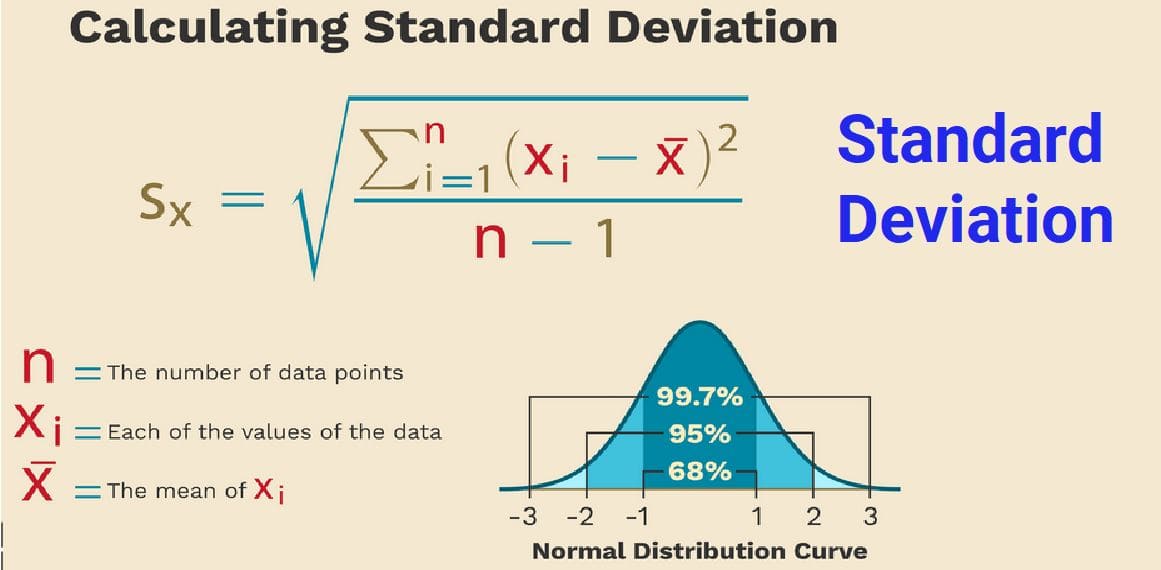
When calculating sample variance:
\[ s^2 = \frac{\sum (X_i - \bar{X})^2}{n - 1} \]
We divide by (n − 1) instead of n.
The deviations must sum to zero, so only (n−1) deviations are independent.
🧮 Step-by-Step Intuition
Suppose we have 4 observations.
Before calculating the mean:
- All 4 values are free
After calculating the mean:
- The final value is determined by the other three
- Only 3 values are free to vary
📘 Mathematical Interpretation
Degrees of freedom represent the number of independent pieces of information used to estimate a parameter.
In general:
DF = n − k
Where:
- n = number of observations
- k = number of estimated parameters
📊 Examples in Statistics
| Situation | Degrees of Freedom | Reason |
|---|---|---|
| Sample Variance | n − 1 | Mean is estimated |
| One-Sample t-Test | n − 1 | Mean estimated from sample |
| Chi-Square Test | (rows−1)(cols−1) | Row & column constraints |
| Regression with k predictors | n − k − 1 | Parameters estimated |
🎯 Visual Analogy
Imagine choosing numbers freely under a rule.
- Without rules → All values free
- With rules → Some values restricted
🌍 Real-Life Examples
📘 Classroom Marks
If the class average is fixed, not all student scores can vary freely.
🏭 Quality Control
If the average product weight is fixed, individual weights have limited flexibility.
💹 Finance
Portfolio risk calculations account for constraints among assets.
🤖 Artificial Intelligence
- Used in model fitting
- Important in parameter estimation
- Helps prevent overfitting
- Appears in loss functions and optimization
⚠️ Why DF Matters
- Ensures unbiased estimates
- Improves accuracy of statistical tests
- Corrects underestimation of variability
- Essential for inferential statistics
🧠 Key Insights
- Degrees of freedom measure independent information
- Constraints reduce freedom
- DF = n − 1 when estimating a mean
- Widely used in variance, tests, and modeling
- Critical for advanced statistics and AI