🎯 Sampling in Statistics
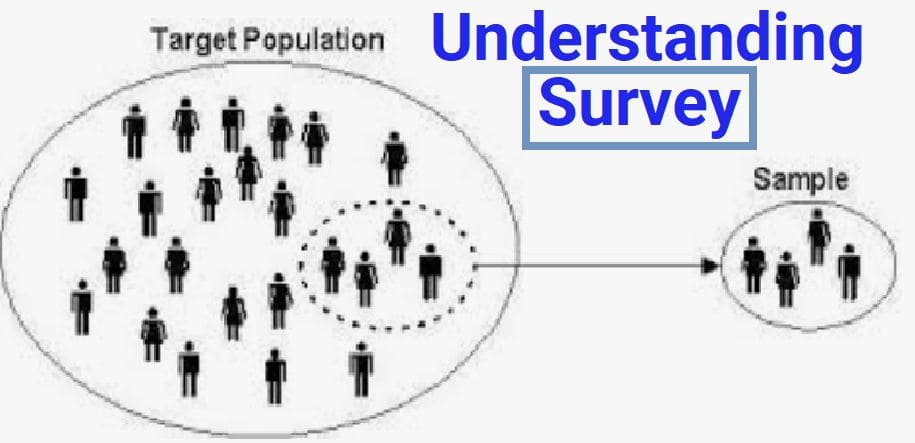
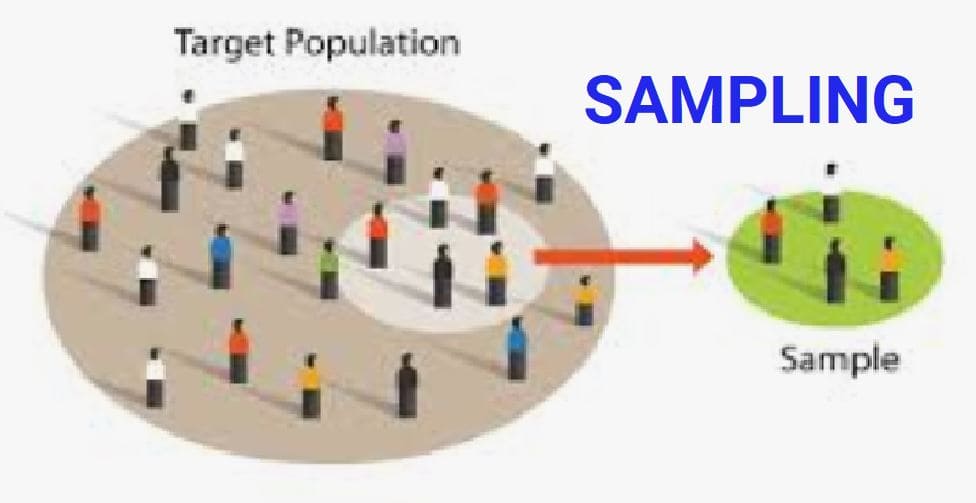
In statistics, sampling is the process of selecting a smaller group from a larger population in order to study and draw conclusions about the whole group.
The smaller group is called a sample, and the entire group is called the population.
❓ Why Do We Need Sampling?
Studying an entire population is often difficult because it can be:
- ⏳ Time-consuming
- 💰 Expensive
- 🧾 Logistically complicated
- 🌍 Impossible when populations are very large
📌 Example
If you wanted to study the relationship between age groups and jobs in your town, asking every resident could take months. Instead, selecting a representative sample gives reliable insights more efficiently.
🧠 What Does Sampling Tell Us?
A good sample helps us:
- ✔️ Estimate population characteristics
- ✔️ Identify patterns and trends
- ✔️ Make predictions
- ✔️ Support decision-making
⚙️ How Sampling Works
1️⃣ Define the Population
The entire group you want to study.
Example: All students in a school
2️⃣ Select a Sample
Choose a smaller group from the population.
Example: 100 students selected from 1,000 students
3️⃣ Collect Data from the Sample
Survey or measure only the selected group.
4️⃣ Analyze and Generalize
Use findings to make conclusions about the entire population.
📏 Important Principles of Good Sampling
✅ Representative Sample
The sample should reflect the characteristics of the whole population.
Example: If a school has equal numbers of boys and girls, the sample should include both.
✅ Adequate Sample Size
A sample must be large enough to reduce errors.
Too small → unreliable results Larger sample → more accurate results
✅ Random Selection
Every member should have an equal chance of being selected.
🏫 Example: School Cafeteria Decision
A school is deciding whether to offer chocolate milk at lunch.
- Total students = 1,000
- Surveying only 10 students → results may be inaccurate
- Surveying 100 students → better representation
🌍 Real-Life Examples of Sampling
- 🗳️ Election polls survey a sample of voters
- 📺 TV ratings measure sample households
- 🛒 Companies test products on sample customers
- 🏥 Medical researchers test new treatments on sample patients
- 🌾 Farmers test soil samples from different fields
- 🏭 Quality inspectors test sample products from factories
🎁 Benefits of Sampling
- ⚡ Saves time
- 💰 Reduces cost
- 📊 Easier data management
- 🔍 Allows detailed study
- 📈 Enables quick decision-making
- 🌎 Practical for large populations
⚠️ Risks and Challenges in Sampling
❌ Sampling Bias
Occurs when some members of the population are more likely to be selected than others.
Example: Surveying only morning students about school meals
❌ Small Sample Size
May not represent population accurately.
❌ Non-Random Selection
Choosing friends or nearby people may distort results.
🧪 Common Types of Sampling (Basic Overview)
- Random Sampling: Everyone has equal chance
- Systematic Sampling: Selecting every nth member
- Stratified Sampling: Dividing population into groups, then sampling each
- Cluster Sampling: Selecting entire groups randomly
Each method is used depending on the study’s goals and population structure.
🧠 Key Takeaways
- Sampling studies a part to understand the whole
- It saves time, money, and effort
- A good sample must be random and representative
- Larger samples generally give better accuracy
- Sampling is used in research, business, medicine, and government